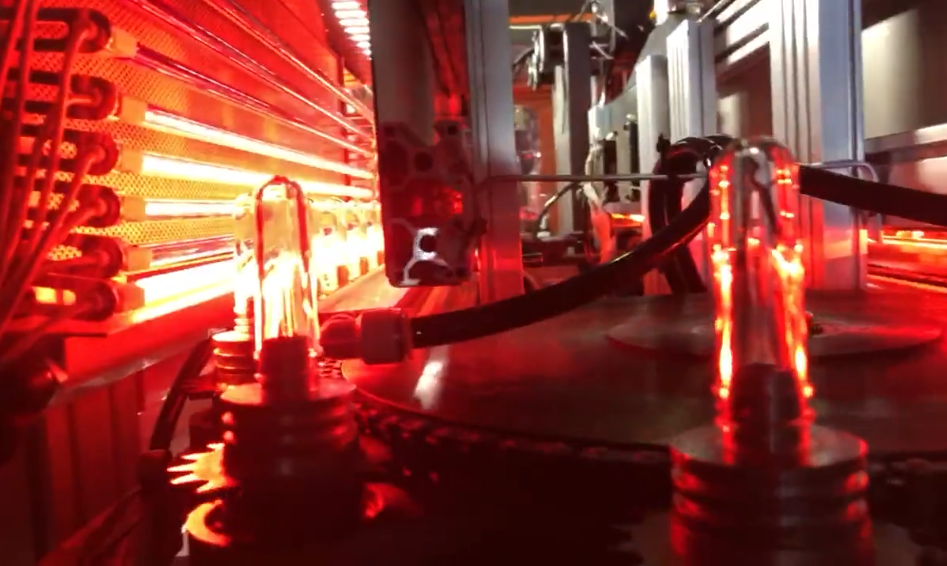
You’ve been around the blow molding line long enough to know how it goes. The heating tunnel starts chasing its own temperature, preforms come out uneven, and you’re back to sorting rejects and swapping lamps on the fly. When your Sidel, Krones, SIPA, Husky, SACMI, or Nissei ASB blow molder sits idle, every minute is money going up in smoke.
What matters under the hood
We built this IR radiator specifically for PETC preforms to follow the OEM heating profile. It uses short-wave halogen/quartz emitters tuned for fast, repeatable absorption. Standard output is 200–500 W, 230 V, and it mates up with an R7s connector so it drops straight into the existing lamp sockets. The envelope is compact enough to clear tight heating tunnels, and the filament geometry gives you a tight hot zone that holds temperature spread within ±2°C across the preform wall. You get quick warm-up, stable output, and consistent stretch behavior.
Why it behaves the way it does on your machine
On your blow molder, that repeatable heating means fewer hot spots and cold shots. Scrap drops, and you can push line speed without constantly chasing quality. Energy use goes down because the emitter delivers intensity where preforms actually need it. Longer service life translates to fewer maintenance windows and less spare inventory on the shelf. For plants running 24/7, the real payoff is predictability: stable heating supports repeatable cycles, consistent bottle weight, and fewer jams downstream.
The practical details that make the difference
Installation is plug-and-play on compatible machines, but do yourself a favor and check the tunnel reflectors and airflow. Dirty reflectors and poor cooling will shorten lamp life. Confirm lamp alignment and measure contact resistance at the socket—loose contacts are a fast track to uneven heating. This radiator is optimized for PETC preforms. If you’re running heavy pigments or barrier blends, let us know so we can adjust the spectral match. Match voltage and wattage to the OEM spec, and you’ll get the repeatability you need, shift after shift.