Stop the Temperature Rollercoaster in Your SIPA Rotary Systems
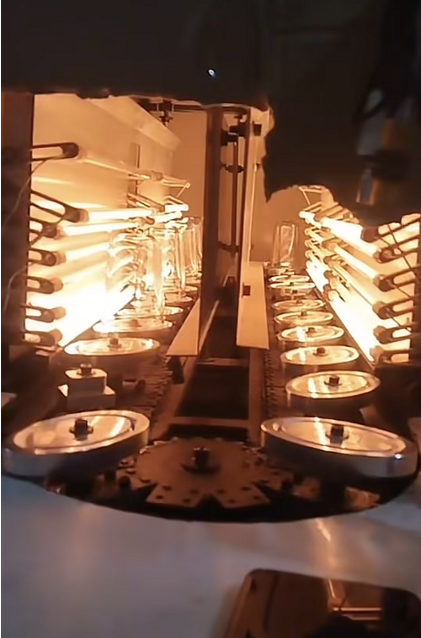
If you’re running a SIPA rotary machine, you know that heat is everything. But here’s the problem: a lot of people treat infrared lamps like lightbulbs—they just grab whatever is on the shelf or mix brands to save a few bucks. That’s a recipe for disaster. When you mix and match batches, you get power variance. Even a tiny 5% difference in wattage across your modules can mess everything up. Suddenly, your preforms aren’t heating evenly. You end up with weird wall thickness and bottles that just look… wrong. It’s frustrating, and it kills your yield. The secret is in the matching We don’t just “make” heater modules; we build them to mirror the original OEM specs exactly. Most of these systems run on shortwave IR lamps, and the only way to stop those annoying fluctuations is to keep the power dead-consistent. If your machine is set for a specific voltage and wattage, we calibrate the filament density so every single tube in that oven puts out the exact same amount of heat. Think about it this way: you can’t just swap a 2000W lamp for a 2200W one. That extra 200W creates a hot spot. Simple as that. We keep the resistance tight across the whole module so you don’t have to play “guess the temperature” with your settings. The gear under the hood We use high-purity quartz glass with special coatings. The goal is to push that heat forward, straight into the PET preform, where it belongs. Depending on which generation of machine you’re running, we use R7s or Sk15 connectors. We make sure these are tough. They live in a brutal, high-heat environment, and the last thing you need is a connector that oxidizes or wiggles loose while you’re mid-run. And we don’t skimp on the wiring. We use heavy-duty wire rated for continuous high-current loads. Some guys use thin-gauge wire that drops voltage as it travels down the oven, meaning the lamp never actually hits full power. With our setup, you get every bit of wattage you paid for. A few things to keep in mind High-density IR heating is aggressive. It works, but it puts a lot of pressure on your cooling blowers. If you’re cranking up the wattage to squeeze out faster cycle speeds, make sure your oven’s exhaust is wide open. If the airflow gets choked, the heat soaks back into the reflectors. That’s how you fry your lamps early. One last tip: “drop-in” replacements only work if the footprint and electrical load match your controllers. Do yourself a favor and double-check your current draw before you wire up a full bank of new modules. It’ll save you a massive headache later.